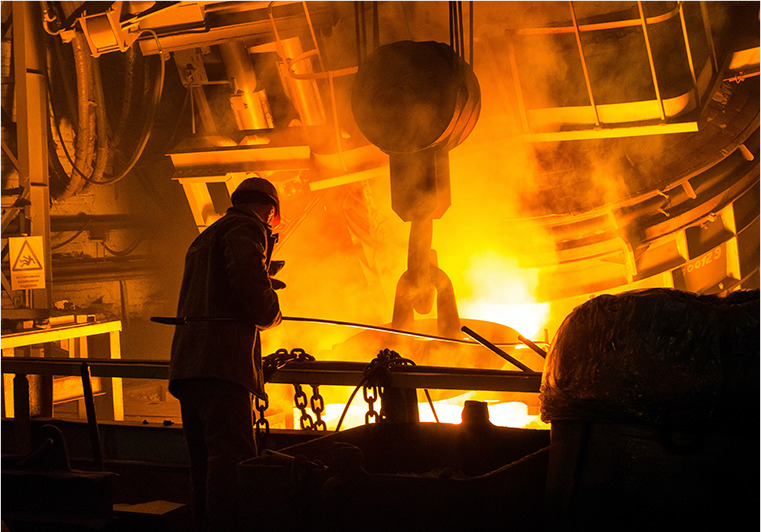
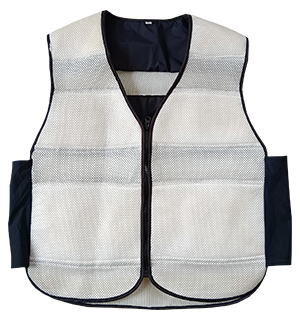
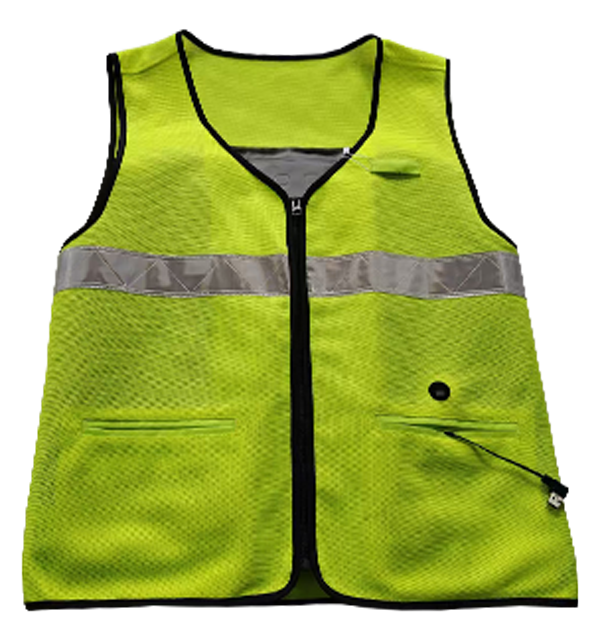
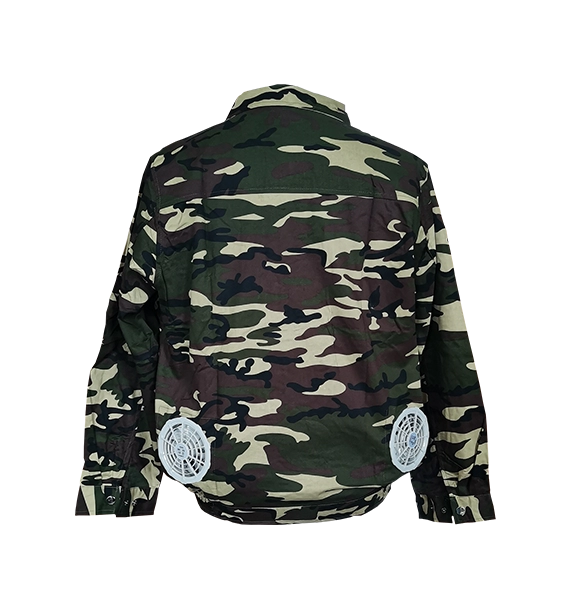
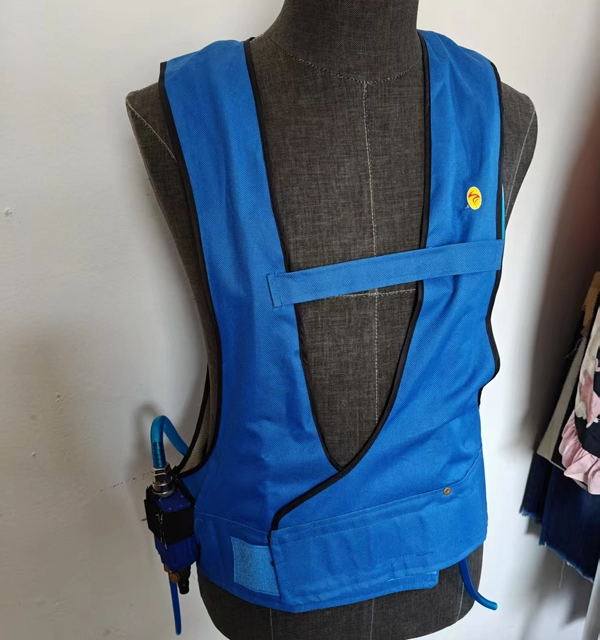
In many heavy industrial environments such as metallurgy, welding, shipyards, sandblasting, and boiler maintenance, workers are constantly exposed to extreme heat conditions. Traditional cooling methods are often insufficient, especially when combined with heavy protective equipment (PPE). This is why the air-vortex cooling vest with cooler has become an increasingly important solution for modern industrial safety and thermal comfort.
1. Heat Stress in Industrial Workplaces
One of the most serious risks in high-temperature working environments is heat stress. When the human body is unable to regulate its internal temperature effectively, it leads to fatigue, dizziness, reduced concentration, and in severe cases, organ strain.
In industries such as steel production, foundries, and welding workshops, ambient temperatures can easily exceed safe working limits. Combined with radiant heat from furnaces or molten materials, workers are continuously exposed to dangerous thermal loads.
Without effective cooling support, heat stress becomes a persistent occupational hazard that directly affects productivity and safety.
2. Risk of Heat Exhaustion and Heat Stroke
Prolonged exposure to high temperatures can escalate from discomfort to life-threatening conditions such as heat exhaustion and heat stroke.
- Heat exhaustion typically includes heavy sweating, weakness, and nausea
- Heat stroke is more severe and may involve confusion, loss of consciousness, and even death if untreated
In confined or semi-enclosed industrial spaces such as ship engine rooms or boiler compartments, ventilation is often limited, increasing the risk significantly. Therefore, continuous personal cooling is essential for worker protection.
3. PPE Makes Heat Conditions Worse
Personal protective equipment (PPE) such as flame-resistant suits, welding gear, and chemical-resistant clothing is necessary for safety compliance. However, these protective layers also trap heat and reduce airflow around the body.
Instead of cooling the worker, PPE often creates a thermal insulation effect, making body heat accumulate faster. As a result, even moderate environmental heat becomes unbearable when combined with full protective gear.
This creates a contradiction: workers must stay protected, but protection itself increases heat stress.
4. Why Traditional Fan Cooling Systems Are Not Enough
Conventional fan-based cooling vests provide airflow, but their effectiveness is limited in extreme environments.
- They only circulate ambient hot air, which provides minimal cooling effect
- In high-temperature workshops, the air itself is already hot
- Cooling becomes uneven and insufficient for long-duration work
In addition, fan systems often struggle to perform in dusty or high-vibration industrial conditions, reducing reliability.
5. Limitations of Ice-Based Cooling Vests
Ice packs or phase-change cooling vests are widely used in some industries, but they come with critical limitations:
- Limited cooling duration (typically 1–3 hours)
- Requires frequent replacement or re-freezing
- Cooling intensity decreases over time
- Not suitable for continuous full-shift operation
For industries requiring 6–12 hour continuous work cycles, ice-based systems are not practical as a long-term solution.
6. The Need for Continuous and Stable Cooling Solutions
Given the limitations of traditional cooling methods, industrial workers need a solution that provides:
- Continuous cooling throughout long shifts
- Stable performance under extreme heat conditions
- Compatibility with PPE systems
- Reliable operation in harsh environments
This is where the air-vortex cooling vest with cooler system becomes highly relevant. By using compressed air and vortex tube technology, it delivers consistent cooling airflow directly to the body without relying on batteries or limited cooling materials.
Conclusion
As industrial environments become more demanding, worker safety requirements continue to rise. Heat stress, heat exhaustion, and PPE-related overheating are serious challenges that cannot be solved by traditional cooling methods alone.
The air-vortex cooling vest with cooler represents a more advanced approach to personal thermal management, offering continuous and reliable cooling for high-temperature industrial applications.
For manufacturers like Suzhou SenJoy Cooling Clothing Garment Co., Ltd., this technology plays a key role in improving occupational safety and supporting workers in the most challenging environments.